
BARTON
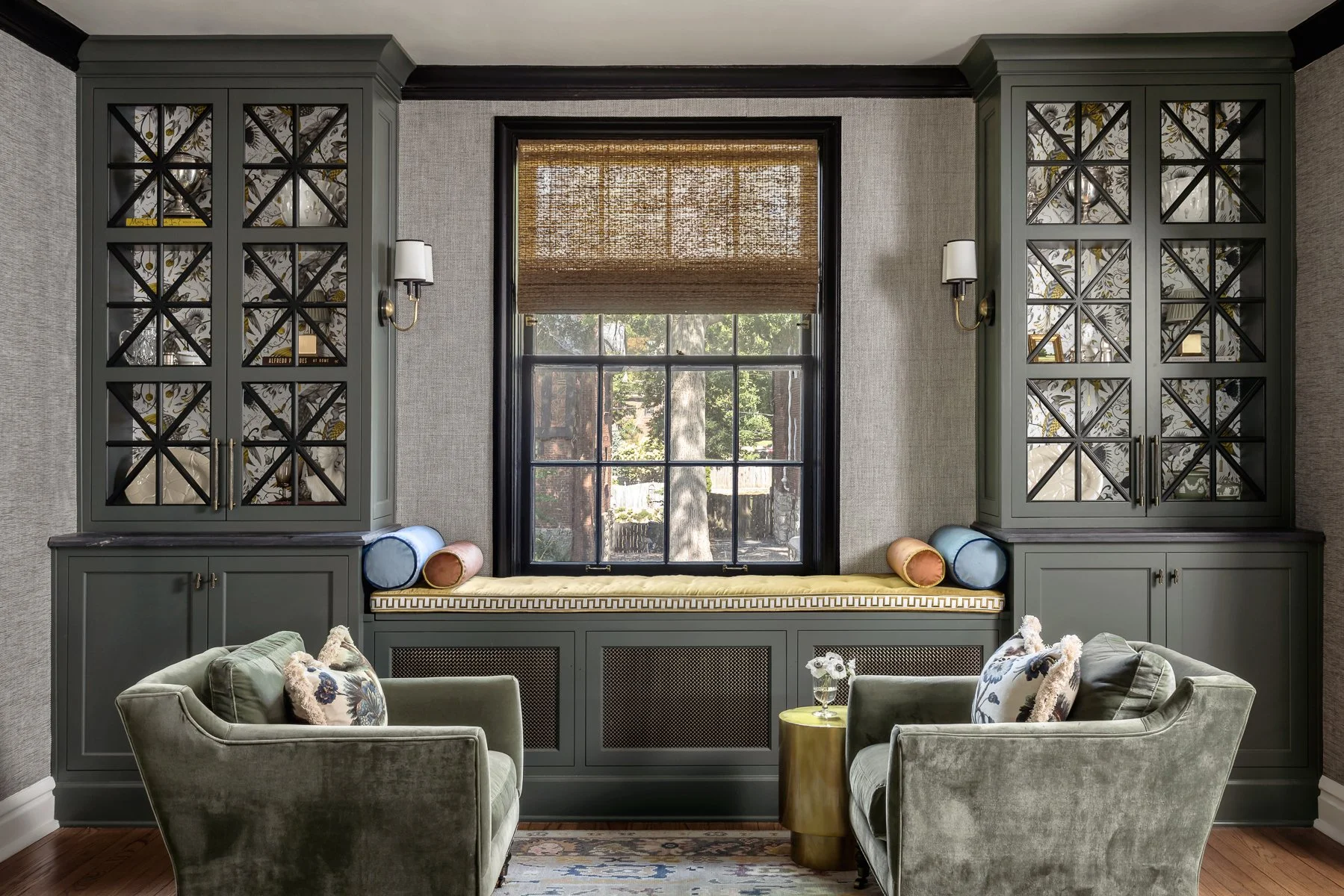
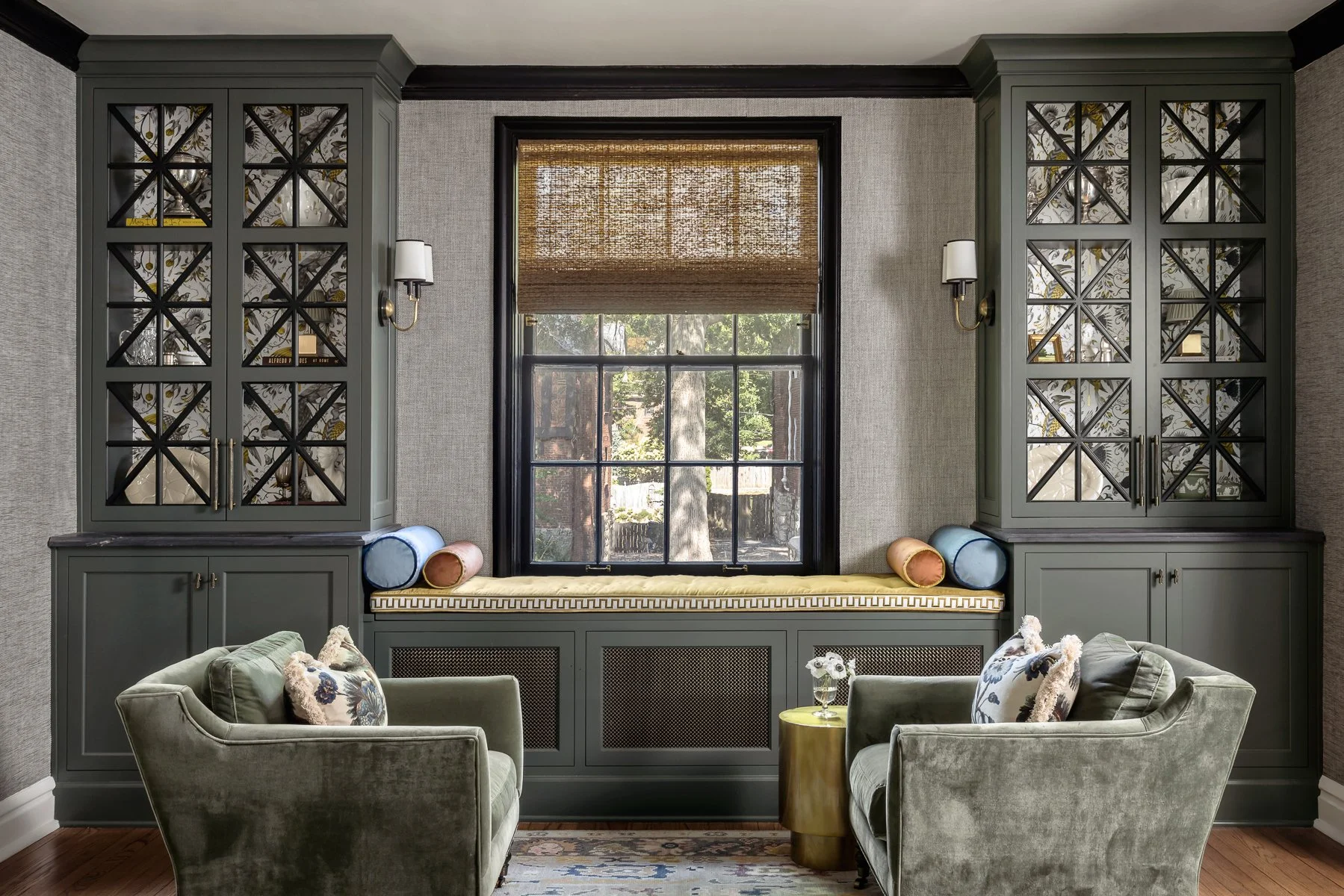
We wanted this room to feel as though it had always belonged to the house.
The starting point was the cabinetry. Two tall built-ins were designed to frame the original window, with a long upholstered window seat connecting them below. Dark green paint gives the millwork weight, while the patterned cabinet backs, brass hardware and interior lighting bring in just enough detail. The geometric glass doors were drawn specifically for the room, giving the cabinetry a more architectural presence without making it feel overly formal.
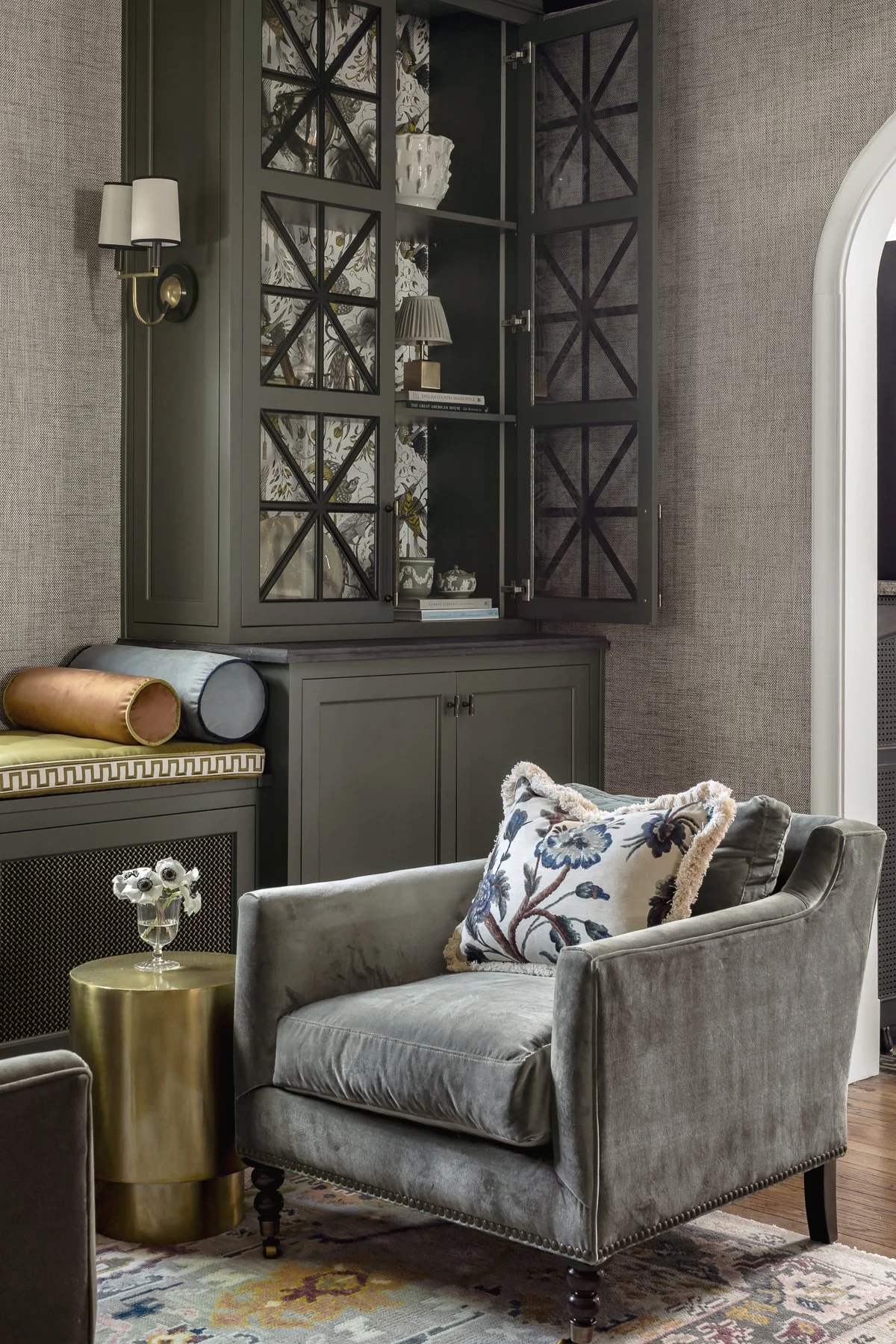
From there, we layered in grasscloth, aged brass, soft velvet, patterned textiles and collected pieces that feel appropriate to the age of the home. The window seat hides the radiator behind custom grilles, making a necessary element part of the composition rather than something to work around.
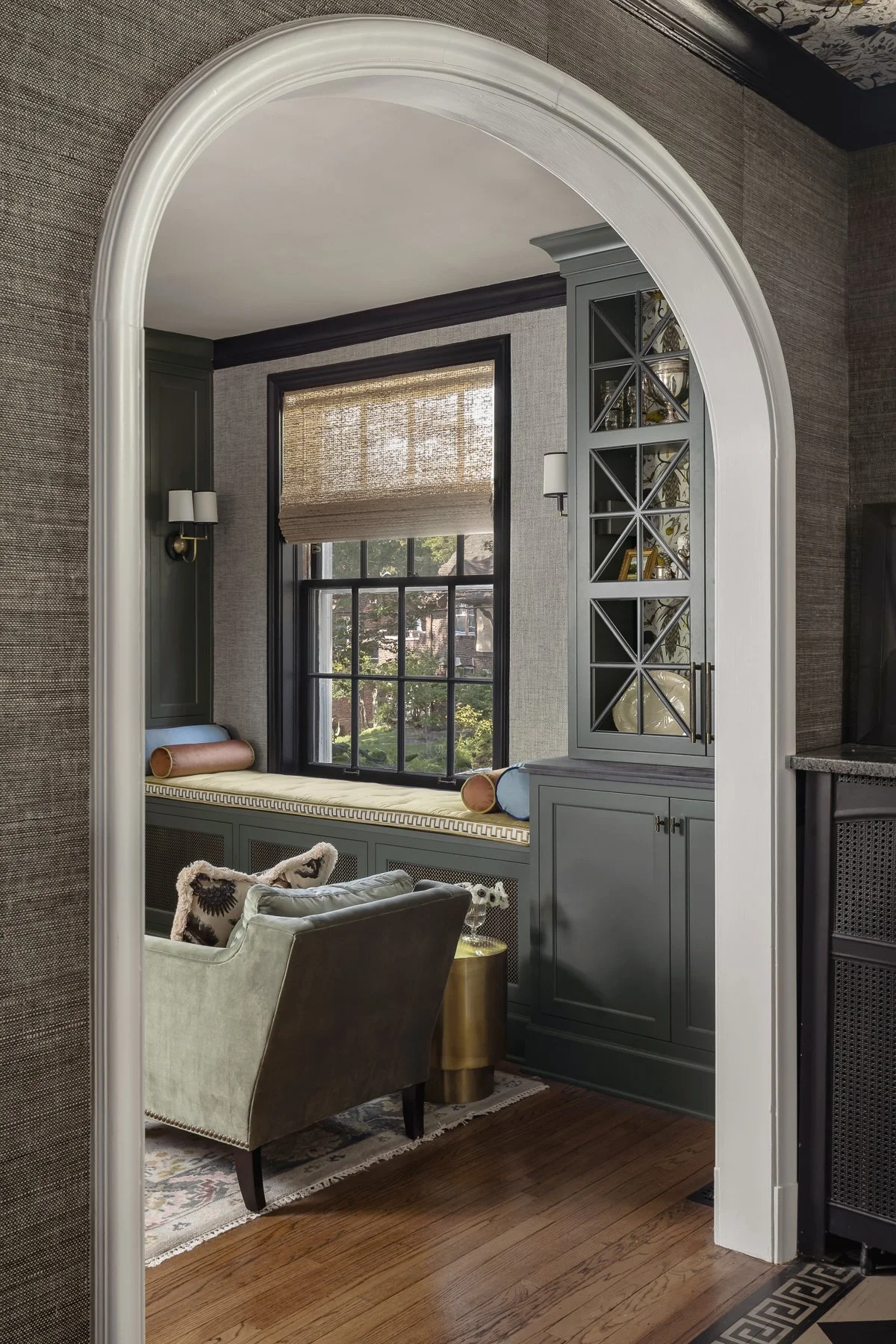
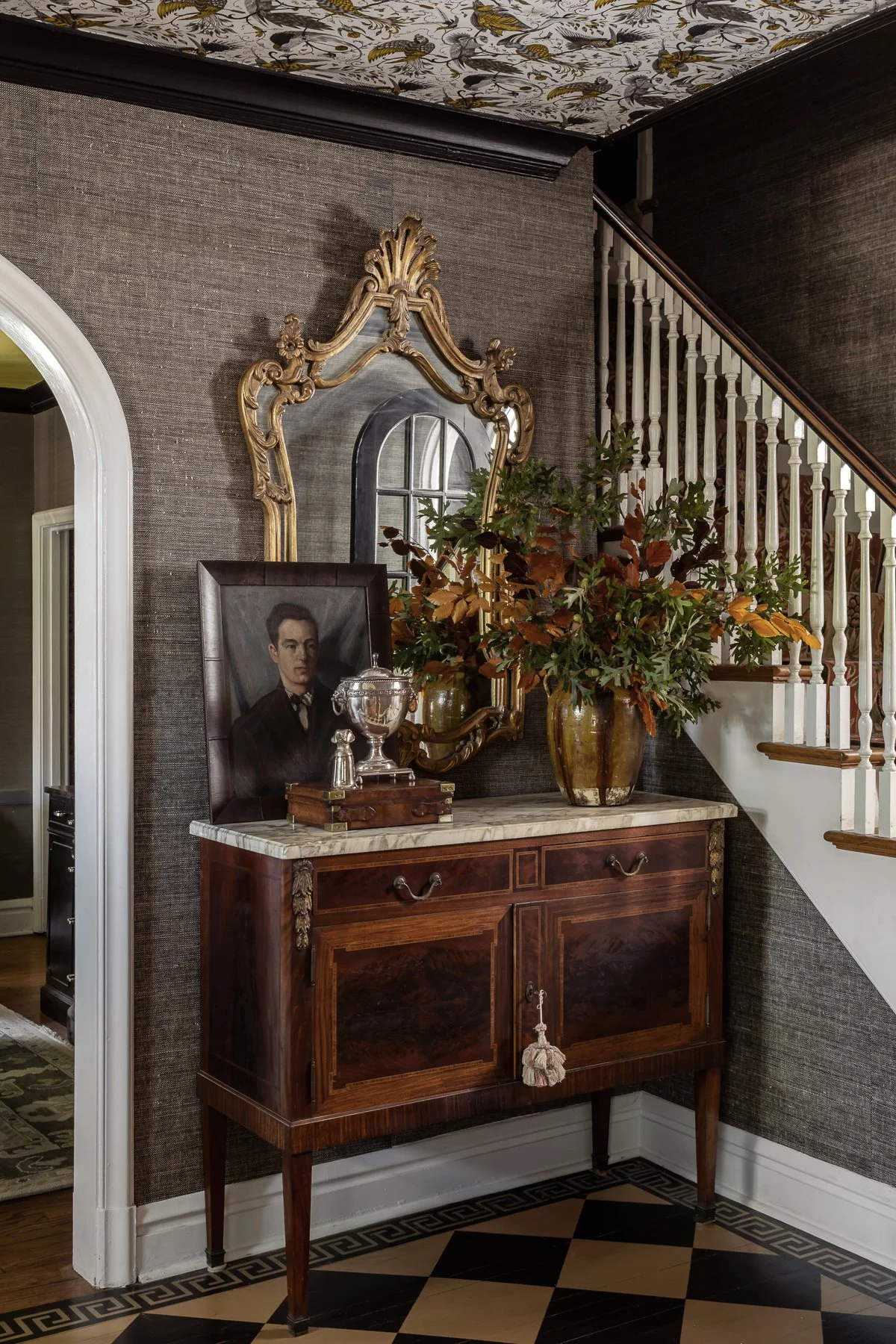
The adjoining hall carries the same point of view with dark woven walls, painted floors, antique furniture and wallpaper overhead. Together, the spaces feel collected rather than newly decorated: comfortable, interesting and rooted in the character of the house.
This guest bedroom is designed as a lighter, more cheerful counterpoint to the home’s moodier public spaces, while still feeling appropriate to the character of the historic Tudor residence. Rather than treating a guest room as secondary, the design gives it a distinct identity—fresh, welcoming, and layered enough to feel considered.
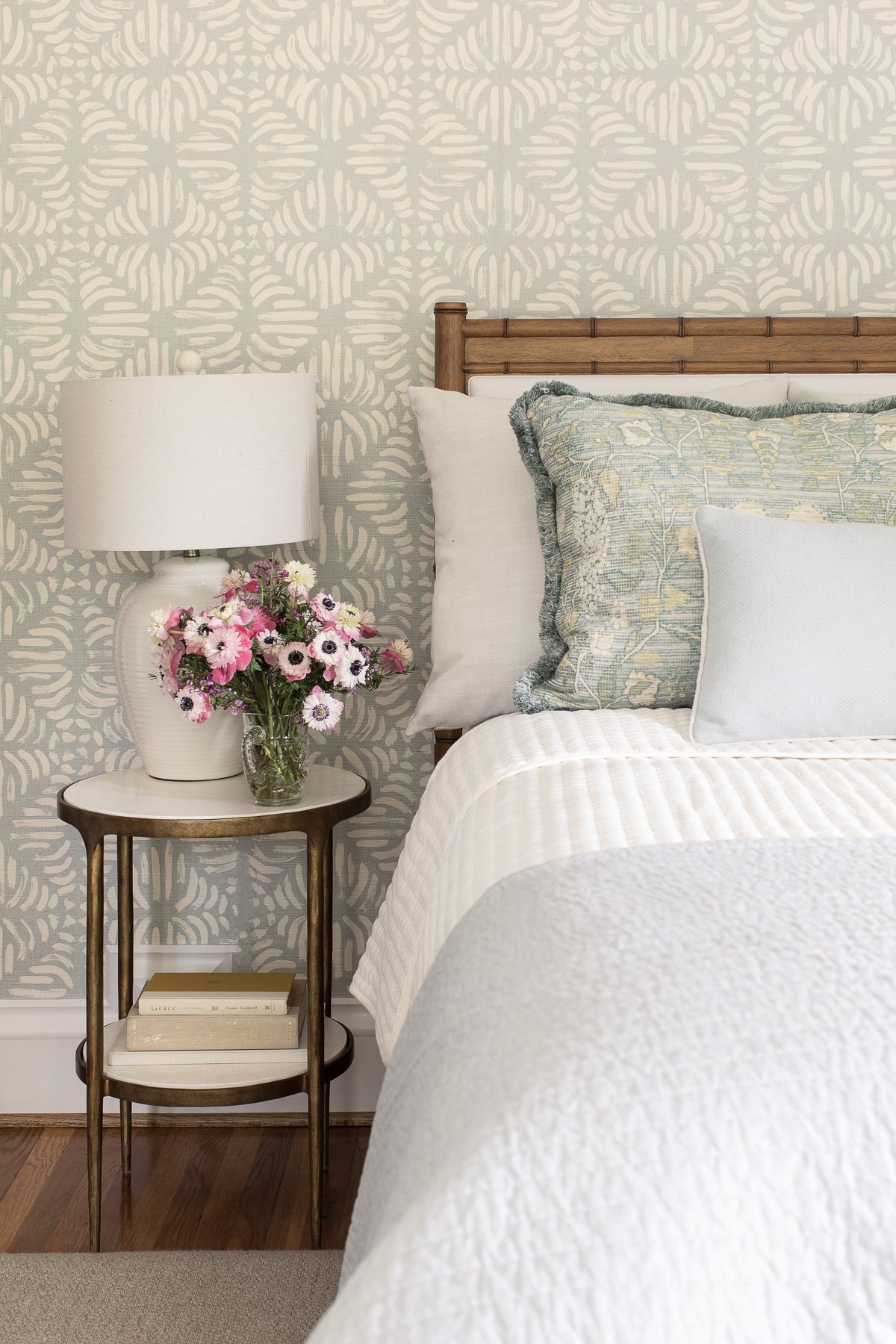
The wallpaper establishes the room’s personality. Its soft blue-and-ivory palette keeps the space airy, while the loose, almost hand-blocked botanical motif introduces movement and a sense of craftsmanship. The pattern is graphic enough to give the room architectural presence, but its restrained coloration allows it to function almost as texture from a distance. Carrying it across the walls creates an enveloping backdrop without making the bedroom feel visually heavy.
Against that pattern, the warm wood bed becomes an important grounding element. Its bamboo-inspired detailing brings an organic, slightly collected quality to the room and introduces the warmth of natural wood against the cooler blues. It feels traditional without being formal, which was important in creating a bedroom that belongs within an older home while still reflecting a more relaxed, contemporary way of living.
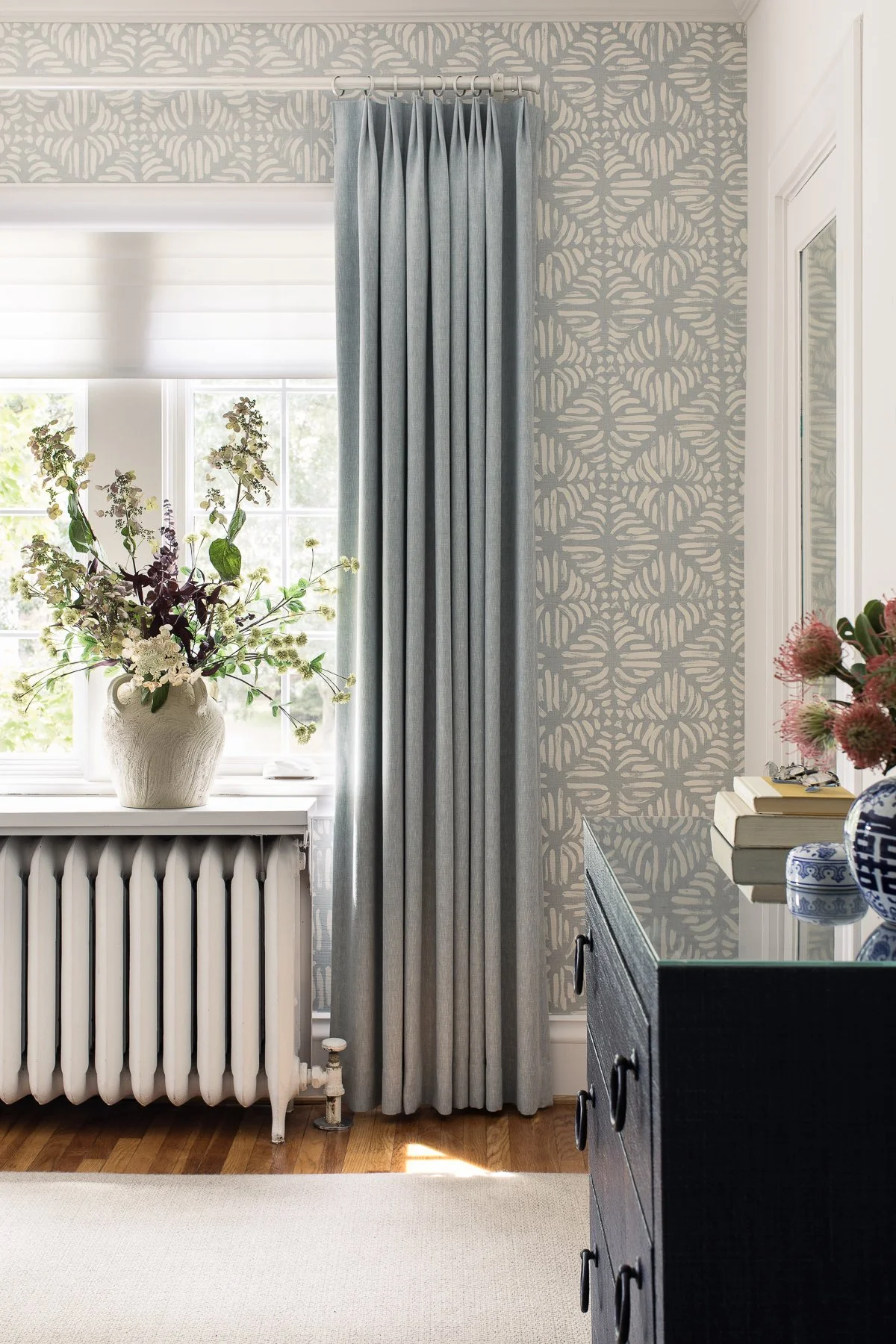
Full-length blue draperies reinforce the palette while adding softness and verticality. Their tailored pleating gives the windows a finished architectural quality, while the muted textile tempers the abundant natural light and makes the room feel restful rather than overly sweet.
Crisp white bedding keeps the composition fresh, while layers of pale blue quilting and patterned pillows bring the wallpaper’s colors forward onto the bed. Brass, ceramic, and vintage-inspired accents add warmth and a sense of evolution over time.
The primary bedroom presented a different challenge from the historic rooms elsewhere in the residence. Located within a later addition, the generously scaled space offered ample volume but little of the architectural character found in the original Tudor house. For homeowners whose tastes lean modern and minimal, the goal was not to recreate period detailing that had never existed here. Instead, the room was given depth and permanence through proportion, materiality, tailoring, and carefully controlled symmetry—creating a contemporary retreat that still feels connected to the substance of the older home.
The palette was intentionally restrained. Soft off-white walls allow the room to read almost as a cloud, creating a quiet envelope within which variations of ivory, flax, taupe, charcoal, and silver become increasingly perceptible. Rather than relying on color for interest, the design builds dimension through texture.
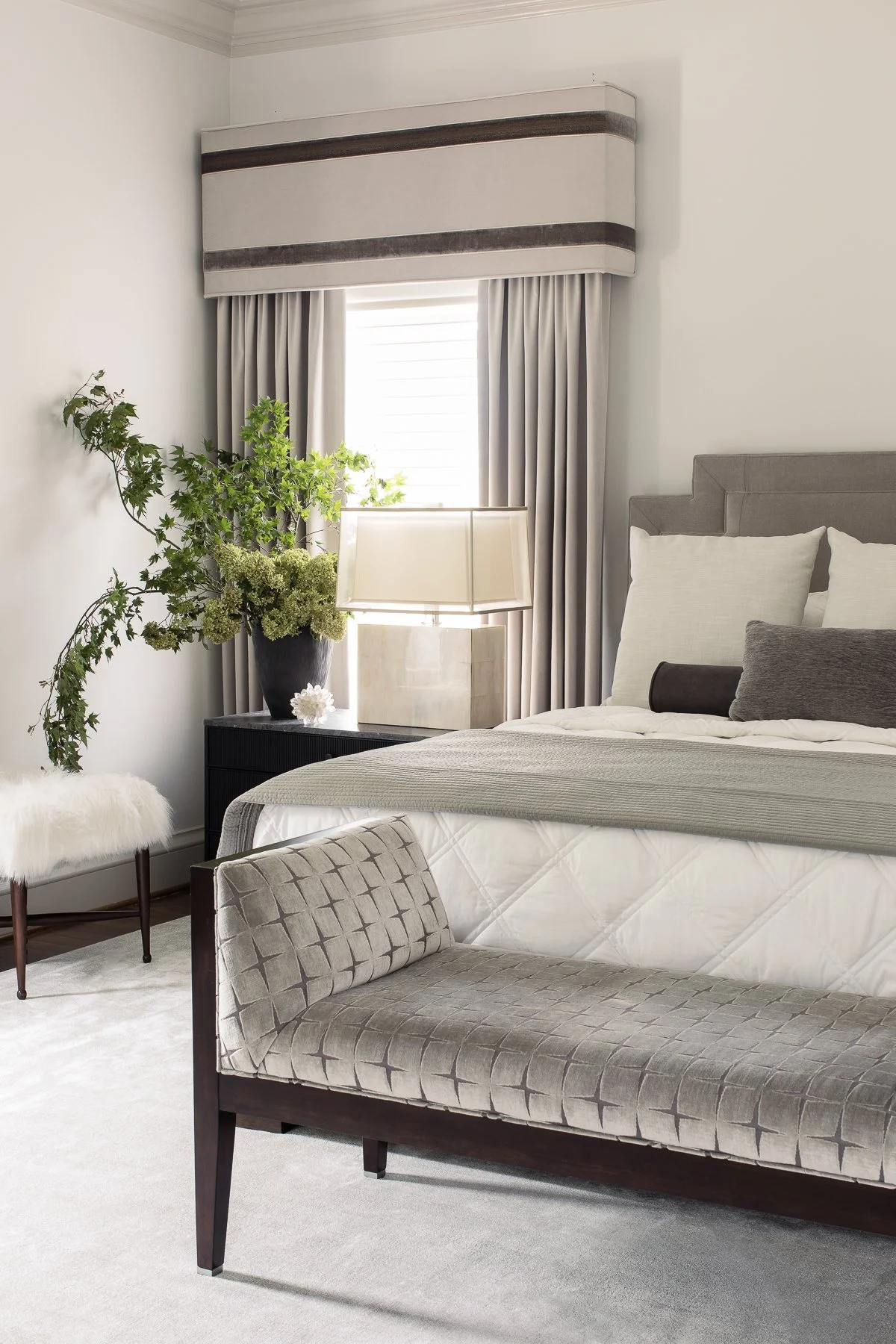
An all-wool quiet taupe greige carpet establishes the foundation. Its subtle pattern gives the expansive room visual structure while remaining quiet beneath the furnishings. At the windows, full-length textured flax draperies introduce softness and vertical rhythm. Above them, tailored horizontal valances are detailed with broad bands of deep velvet, giving the otherwise simple window treatments an architectural weight appropriate to the scale of the room. This contrast between natural texture and more luxurious velvet became an important recurring language throughout the space.
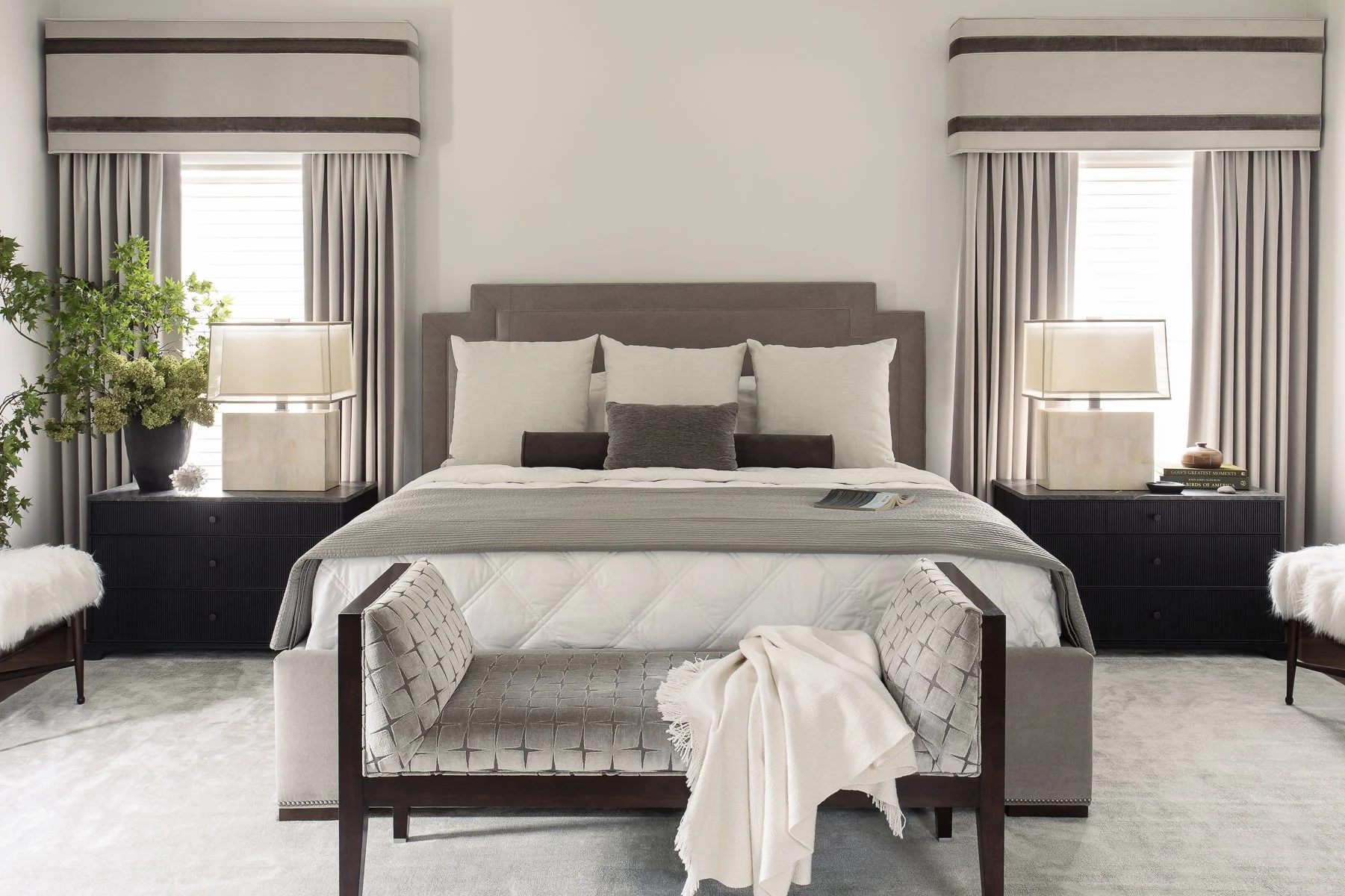
The bed was selected as the central architectural gesture. Its upholstered headboard steps inward through a series of notched planes, creating a strong silhouette without unnecessary ornament. Polished-nickel nailhead detailing traces the form with precision. On either side, deeply reeded off-black bedside chests topped in dark marble provide visual gravity. Overscaled lamps—each substantial in both dimension and weight, with luminous bone-finished bases—were intentionally chosen to hold their own against the height of the windows and breadth of the bed wall.
At the foot of the bed, a dark wood-framed bench upholstered in a silvered, foiled-effect velvet introduces another layer of quiet pattern and reflectivity. A pair of white, long-haired ottomans at the outer edges adds an unexpected softness and prevents the symmetry from becoming overly formal.
CREDITS
Custom cabinetry design: Murphy and Moore Design
Interior design: Murphy and Moore Design
Prop styling and florals: Murphy and Moore Design
Photography: Megan Lorenz
